
Why Does My Dog Lick My Ears?

You are settled in on the couch, and your dog clambers up beside you, zeroes in on your ear, and starts licking. It might make you laugh, wince, or wonder, “Why does my dog lick my ears and is it something I should worry about?” The short answer is that ear licking is a natural dog behavior rooted in social bonding, affection, and communication. Dogs lick each other’s ears as a grooming ritual and a sign of trust, and when your dog extends that behavior to you, it is usually an expression of closeness and care. That said, it is worth understanding what drives this behavior, when it is perfectly fine, and when it might signal something worth a closer look.
The Most Common Reasons Dogs Lick Ears
Dog behavior is rarely random, and ear licking is no exception. There are several well-established reasons why dogs engage in this particular habit, most of which are perfectly normal and even endearing.
It Is a Sign of Affection and Bonding
Dogs are deeply social animals that use physical contact including licking to express love and strengthen bonds. In the wild, wolves and wild dogs groom each other as a way of maintaining social connections within the pack. When your dog licks your ears, they are likely engaging in the same instinctive behavior, treating you as a trusted member of their group. It is one of the ways dogs say, “I love you, and I feel safe with you.”
Dogs Are Attracted to the Scent and Taste of Ears
Human ears produce a natural secretion called cerumen, more commonly known as earwax. To your dog’s highly sensitive nose and taste buds, this has a distinct and interesting scent and flavor. This is one of the reasons dogs lick ears so enthusiastically. What seems unremarkable to us is genuinely fascinating to them. Similarly, sweat and natural skin oils around the ear can attract a dog’s attention. This does not mean anything is wrong; it is simply your dog being drawn in by sensory information that their biology makes hard to ignore.
It Is a Form of Social Grooming
Allogrooming, the practice of grooming another individual, is well-documented in social animals, including dogs. Puppies learn early that licking is a grooming and bonding behavior, starting with interactions with their mother and littermates. When a dog licks your ears, they may be performing this same grooming ritual, essentially helping to keep you clean in the way they would care for a packmate. It is a generous and sincere gesture in dog terms, even if the execution is a little slobbery.
They Are Seeking Attention or Communication
Dogs quickly learn which behaviors get a response from their owners. If licking your ears has ever prompted laughter, a cuddle, or even a mild scolding (which is still a form of attention), your dog may have learned that this behavior is an effective way to get you to engage with them. Ear licking can also be a dog’s way of checking in with you emotionally, particularly if you seem sad, stressed, or distracted. Dogs are remarkably attuned to human emotions and may lick as a form of comfort-seeking or comfort-giving.
Submissive Behavior or Appeasement
In dog social dynamics, lower-ranking individuals often lick the faces and ears of more dominant animals as a gesture of submission and respect. If your dog licks your ears in situations where they seem particularly deferential such as when greeting you after a long absence or when meeting new people as this may be part of their natural appeasement language. It is not a sign of distress; it is your dog communicating their trust in and respect for you.
Why Does My Dog Lick Other Dogs’ Ears?
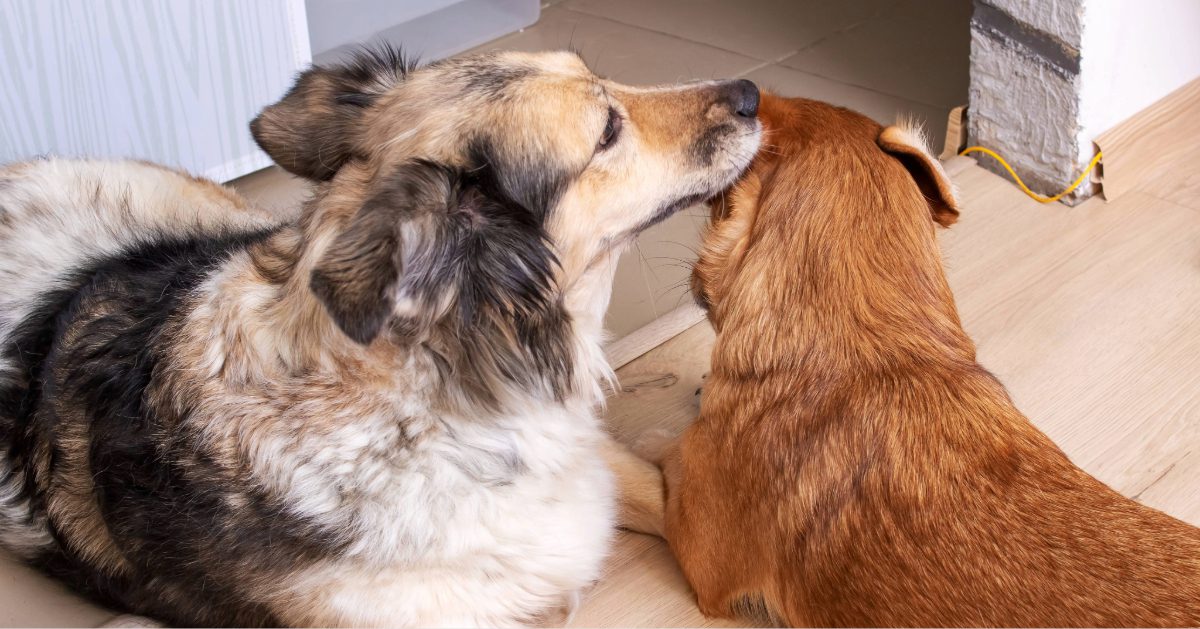
If you have a multi-dog household, you may have noticed your dogs licking each other’s ears. This is completely normal and is typically an expression of social bonding and affection between dogs. It usually indicates a positive, comfortable relationship.
That said, it is worth paying attention to the dynamic. Mutual grooming tends to be reciprocal and both dogs take turns. If one dog is always licking while the other always tolerates it (or seems to dislike it), it may reflect an imbalanced relationship worth monitoring. In most cases, though, dogs licking each other’s ears is a healthy and natural interaction.
When Ear Licking Between Dogs Might Signal a Health Issue
One situation that warrants veterinary attention is when a dog becomes obsessively focused on licking another dog’s ears. Dogs have an incredible ability to detect changes in scent, and an ear infection produces a distinct odor that other dogs may notice before you do. If your dog is unusually persistent about licking a canine housemate’s ears, it is worth checking those ears for signs of infection: redness, discharge, odor, or discomfort. If anything looks or smells off, schedule an appointment with your veterinarian.
Is It Safe to Let Your Dog Lick Your Ears?

This is a question many dog owners ask, and the answer requires a little nuance. For most healthy adults with intact skin and no ear conditions, occasional dog ear licking poses minimal risk. However, there are a few things to be aware of.
Bacterial Transfer
Dogs carry bacteria in their mouths that are generally harmless when they remain on the surface of healthy skin. However, the ear canal is a warm, moist environment that can be more hospitable to bacterial growth. Repeated ear licking by a dog could, in theory, introduce bacteria into the ear canal, though this is not a common problem for healthy individuals. If you have a compromised immune system or existing ear conditions, it is worth discussing this with your healthcare provider.
When to Redirect the Behavior
Whether or not you allow your dog to lick your ears is entirely a personal decision. If you find it endearing and harmless, there is generally no pressing reason to stop it. However, if the behavior becomes excessive, occurs compulsively, or starts to feel like something your dog cannot control, it may be worth a conversation with your veterinarian. Compulsive licking can occasionally be a sign of anxiety, an obsessive-compulsive tendency, or another behavioral issue that benefits from professional guidance.
Could Ear Licking Mean My Dog Has Anxiety?
In some cases, excessive licking including licking of ears, skin, surfaces, and objects can be linked to anxiety or stress in dogs. If your dog licks your ears in a way that feels frantic, repetitive, or out of context with the situation, it may be worth considering whether they are experiencing some form of anxiety. Other signs of anxiety in dogs include pacing, panting, yawning excessively, lip licking, destructive behavior, or clinging to you.
If you suspect your dog’s ear licking is anxiety-driven rather than affection-driven, a conversation with your veterinarian is a great first step. There are many effective ways to support anxious dogs, including behavior modification, environmental enrichment, and in some cases, medication. Your veterinarian can help you identify what is driving the behavior and what steps might help.
How to Gently Discourage Ear Licking
If you enjoy the behavior, there is no need to change it. But if ear licking has become more than you bargained for, there are kind and effective ways to redirect your dog without damaging your bond.
- Calmly disengage when the licking starts, meaning turn your head, stand up, or move away, and then redirect your dog to an appropriate activity like a chew toy, a training session, or a petting session on your terms.
- Avoid responding dramatically, since even a negative reaction can reinforce the behavior by giving your dog the engagement they were looking for.
- The whole family should respond the same way, so your dog will learn the new boundary much more quickly.
- Never punish your dog for licking your ears. It is a natural behavior rooted in affection and social instinct, and punishment can create confusion and undermine trust. Positive redirection is always the kinder and more effective route.
Understanding Your Dog’s Language of Love
When your dog licks your ears, they are speaking to you in their own language, one that says you matter to them, they feel safe with you, and they want to be close. It is a quirky, sometimes soggy expression of the deep bond between dogs and the people who love them. Understanding why your dog does this makes it easier to appreciate the intention behind the behavior, even when the delivery leaves a little to be desired. If you ever have questions about your dog’s behavior, health, or habits, whether related to ear licking or anything else, the team at Trinity Veterinary Hospital in Stillwater, OK is happy to help. Give us a call at (405) 533-0001 or book an appointment online, and let us be a trusted partner in your dog’s well-being.
Recent Posts
About Us
For over a decade, Trinity Veterinary Hospital has provided compassionate, faith-based care to pets in our college town and beyond. We treat every pet like family, offering routine checkups, boarding, and advanced care from a board-certified internist.